
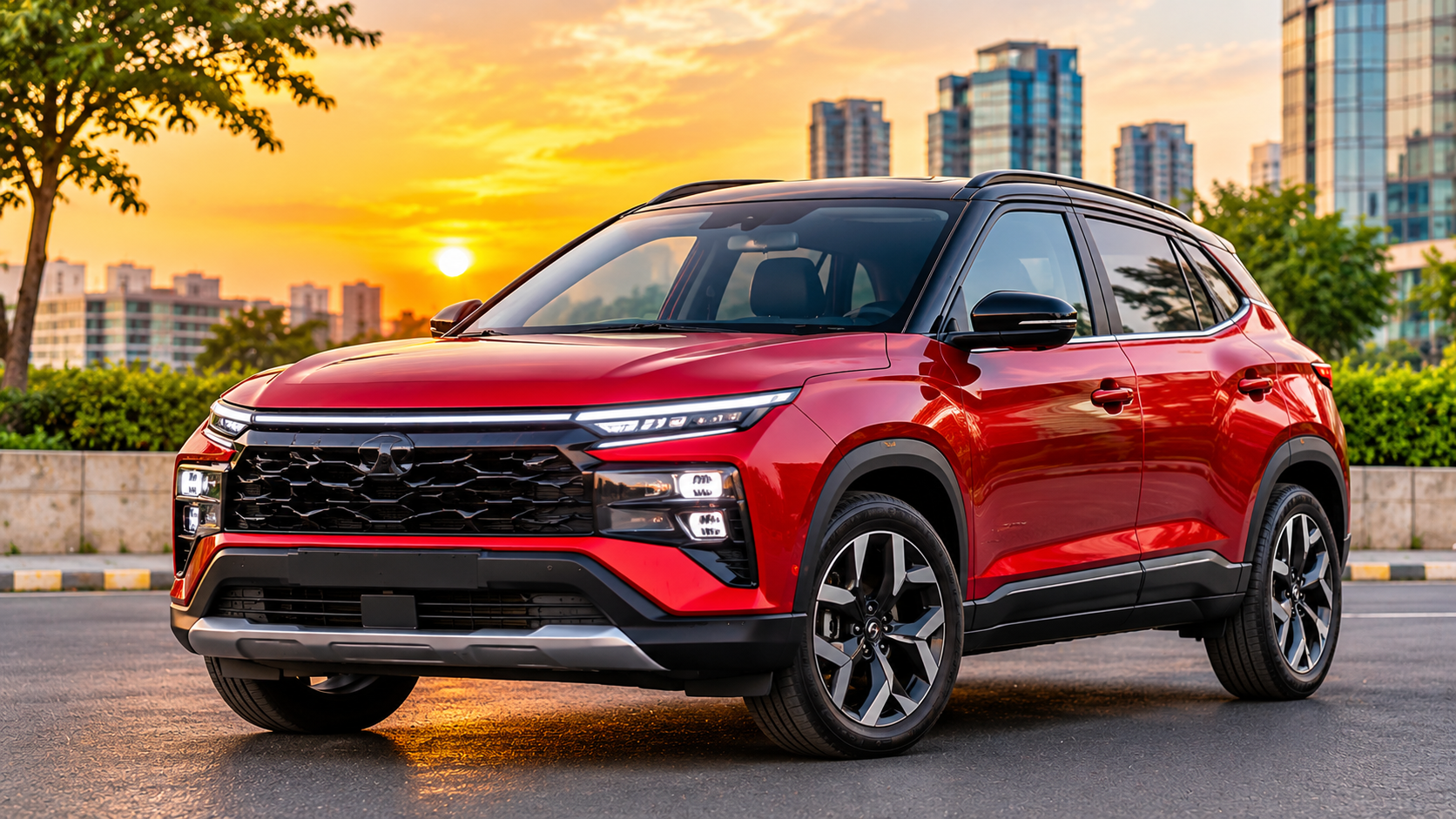
Hyundai Bayon Launched in India: Price, Specs, Features and Everything You Need to Know
Hyundai Motor India launched the Bayon on 26 October 2026, adding a new nameplate to its SUV line-up. Priced from ₹9.99 lakh (ex-showroom), the Bayon sits between the Venue and the Creta and is aimed at buyers looking for a feature-rich midsize SUV without stepping up to the full Creta price range.
Deliveries have started, and a CNG version is scheduled for January 2027. This article covers the official launch details, prices, specifications, key features and who the Bayon is best suited for.
Table of Contents
- Launch Date and Pricing
- Variants and Price List
- Engine, Transmission and Mileage
- Dimensions and Space
- Design and Features
- Safety
- Rivals and Positioning
- Who Should Buy the Bayon?
- Common Mistakes to Avoid
- Final Take
1. Launch Date and Pricing
Hyundai officially launched the Bayon in India on 26 October 2026. Bookings had opened earlier at ₹11,000 through the company website and dealerships. Deliveries began during the festive season.
The introductory ex-showroom starting price is ₹9.99 lakh (often rounded to ₹10 lakh in reports). The range extends to approximately ₹18 lakh for the top automatic variant. All prices quoted here are ex-showroom; on-road costs vary by city due to road tax, registration and insurance.
2. Variants and Price List
The Bayon is offered in seven trims: HX2, HX3, HX3+, HX5, HX6, HX8 and HX10. The 6-speed manual is available across the range. The Intelligent Variable Transmission (IVT/CVT) starts from the HX5 trim.
Approximate introductory ex-showroom prices (as reported at launch):
| Variant | Manual (₹ lakh) | IVT/CVT (₹ lakh) |
|---|---|---|
| HX2 | 9.99–10.00 | – |
| HX3 | 10.89–10.90 | – |
| HX3+ | 11.79–11.80 | – |
| HX5 | 12.44–12.45 | 13.84–13.85 |
| HX6 | 13.56–13.57 | 14.96–15.00 |
| HX8 | 15.09–15.10 | 16.53–16.54 |
| HX10 | 16.64–16.65 | 17.99–18.00 |
Dual-tone options attract a small premium on select variants. Exact figures can vary slightly by source and any ongoing offers — always confirm with a dealer.
3. Engine, Transmission and Mileage
The Bayon is powered by a single petrol engine at launch:
- 1.5-litre MPi four-cylinder naturally aspirated petrol
- Power: 115 PS
- Torque: 143.8–144 Nm
Transmission options:
- 6-speed manual
- Intelligent Variable Transmission (IVT / CVT)
Hyundai claims 18.6 kmpl ARAI mileage for the CVT version. Real-world figures will be lower depending on traffic, load and driving style. There is no diesel or turbo-petrol option at launch. A CNG variant is confirmed for January 2027.
The automatic gets drive modes (Eco, Normal, Sport) and a “Dash Boost” function that Hyundai says provides an instantaneous response for overtakes.
4. Dimensions and Space
| Parameter | Measurement |
|---|---|
| Length | 4,245 mm |
| Width | 1,810 mm |
| Height | 1,605 mm (with roof rails) |
| Wheelbase | 2,600 mm |
| Ground clearance | 205 mm |
| Boot space | 505 litres |
The Bayon is a proper midsize SUV in dimensions and offers a useful 505-litre boot. It is slightly shorter than the Creta but provides competitive space for the segment.
5. Design and Features
Hyundai positions the Bayon as an “Intelligent Utility Vehicle”. Exterior design follows the brand’s latest language with H-edge LED DRLs, dual LED projector headlamps, roof rails and a rugged lower cladding treatment.
Key technology and convenience features (higher variants):
- Dual 12.3-inch curved panoramic displays (instrument cluster + infotainment)
- Generative AI voice assistant (Intelligence by Perplexity + Voice AI by SoundHound) — a first for Hyundai in India
- Over-the-air (OTA) updates for multiple controllers
- Hyundai Bluelink connected-car features
- Panoramic sunroof
- Ventilated front seats
- Powered driver’s seat
- Wireless phone charger
- Bose audio system (select variants)
- Ambient lighting
Lower variants focus on essentials while higher trims (especially HX8 and HX10) are heavily equipped.
6. Safety
Standard and available safety equipment includes:
- Six airbags
- Electronic Stability Control (ESC)
- ABS with EBD
- Hill-start assist
- Tyre Pressure Monitoring System
- Level 2 ADAS on higher variants (features such as adaptive cruise, lane-keeping and collision avoidance functions)
Hyundai states the Bayon is built on its Global K Enhanced platform engineered to meet high safety standards. A formal Bharat NCAP rating was not available at the time of launch. [VERIFY BEFORE PUBLISHING] for any subsequent crash-test results.
7. Rivals and Positioning
The Bayon is positioned between the Venue and Creta. Key rivals include the Maruti Suzuki Victoris / Grand Vitara, Kia Seltos (lower variants), Honda Elevate, Skoda Kushaq, Volkswagen Taigun, MG Astor and Tata Sierra (entry variants).
It undercuts the Creta at the base and offers a more modern digital cabin experience, while the Creta retains broader powertrain choices (including diesel and turbo-petrol) and stronger residual-value perception for many buyers.
8. Who Should Buy the Bayon?
Consider the Bayon if you:
- Want a feature-packed midsize SUV under or around the Creta’s lower price band
- Prefer a modern digital cockpit with dual large screens and AI voice control
- Need a practical 505-litre boot and 205 mm ground clearance
- Are fine with a naturally aspirated 1.5-litre petrol (manual or CVT)
Look elsewhere if you:
- Specifically need a diesel engine
- Want a turbo-petrol for stronger performance
- Prioritise maximum rear-seat space or a larger overall footprint (Creta or Sierra may suit better)
- Prefer a model with a long track record and proven residual values
9. Common Mistakes to Avoid
- Comparing only the base price without checking what features each variant actually gets
- Ignoring on-road price differences between cities
- Assuming the claimed 18.6 kmpl will match daily mixed-driving returns
- Not test-driving both the manual and CVT versions
- Overlooking the upcoming CNG option if low running costs are a priority
10. Final Take
The Hyundai Bayon fills a clear gap in Hyundai’s Indian SUV range. It brings a modern, tech-focused cabin, competitive dimensions and a familiar 1.5-litre petrol engine at a more accessible price point than the Creta. The generative AI voice assistant and dual 12.3-inch screens are genuine differentiators in this price band.
Buyers who value the latest digital features and do not need diesel or turbo power will find the Bayon worth a serious look. Those who prioritise engine variety or maximum residual value may still lean towards the Creta or established rivals. Test-drive the specific variant you are considering and obtain a written on-road quotation before deciding.
D. Comparison Tables
(Price and dimensions tables included in the article body.)
E. FAQs
When was the Hyundai Bayon launched in India?
26 October 2026.
What is the starting price of the Hyundai Bayon?
₹9.99 lakh ex-showroom (introductory).
What engine does the Bayon get?
A 1.5-litre naturally aspirated petrol producing 115 PS and approximately 144 Nm, available with 6-speed manual or IVT automatic.
Is there a diesel or CNG option?
No diesel at launch. A CNG version is scheduled for January 2027.
What is the claimed mileage?
Up to 18.6 kmpl (ARAI) for the CVT variant.
Does the Bayon have ADAS?
Level 2 ADAS is available on higher variants.