
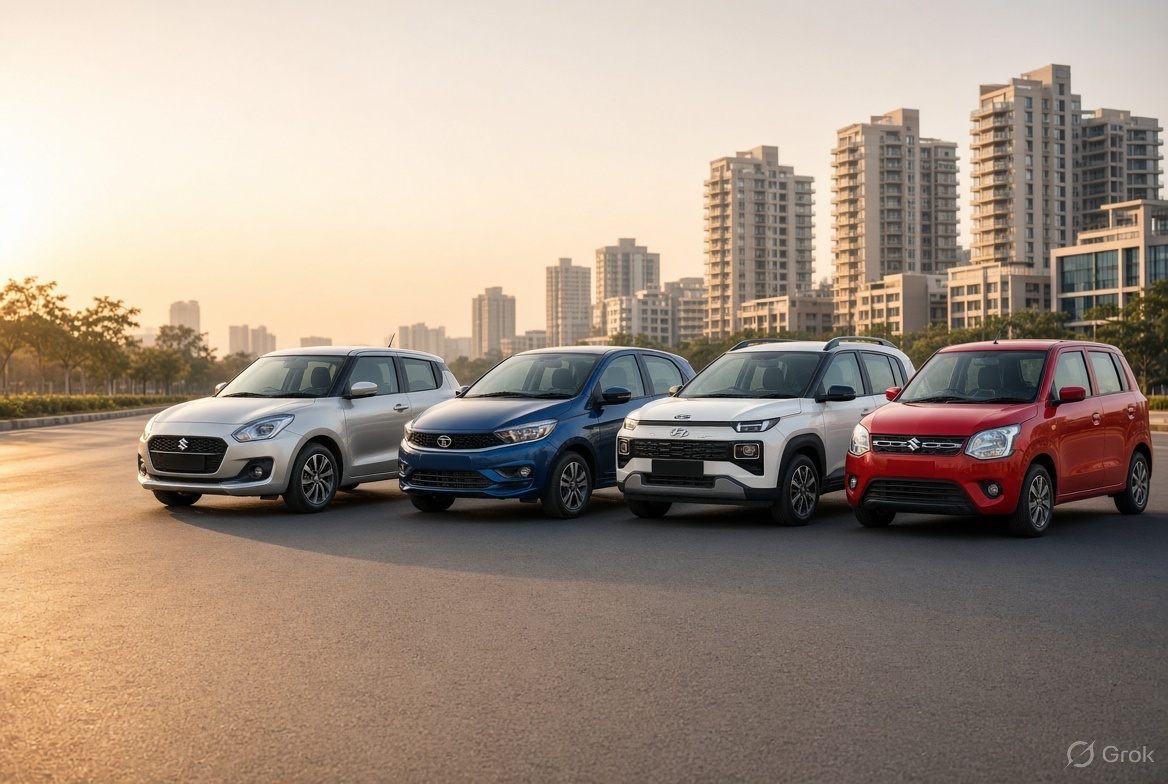
Buying your first car in India doesn’t mean spending a fortune. From the affordable Maruti Suzuki Alto K10 and S-Presso to the practical WagonR, Tata Tiago, Renault Kwid and Hyundai Exter, several options deserve consideration under ₹7 lakh. Explore their prices, features, strengths, limitations and ownership costs in this detailed 2026 buying guide from MOTORFOLIO.
Best Cars Under ₹7 Lakh in India: Practical Choices for First-Time Buyers (2026)
Buying your first car is an exciting milestone, but choosing the right one can be challenging. With several manufacturers offering affordable hatchbacks and compact SUVs in India, buyers have plenty of options without necessarily crossing the ₹7 lakh mark.
However, the cheapest car is not always the best purchase. A first-time buyer must consider more than the initial price. Fuel efficiency, safety equipment, cabin space, driving comfort, maintenance expenses, service availability and resale value can make a significant difference over several years of ownership.
The good news is that the Indian market offers several practical options in this budget. Models such as the Maruti Suzuki Alto K10, Maruti Suzuki S-Presso, Maruti Suzuki Celerio, Maruti Suzuki WagonR, Tata Tiago, Renault Kwid and Hyundai Exter offer different combinations of affordability, convenience and everyday usability.
In this MOTORFOLIO guide, we explore the best cars under ₹7 lakh in India in 2026, compare their key characteristics and explain which models make the most sense for different types of first-time buyers.
Important pricing note: All prices discussed in this article are indicative starting ex-showroom prices, not final on-road prices. Prices and available variants can change by city, state, dealership and purchase date. The figures below should be reconfirmed with the manufacturer before publication and purchase.
Table of Contents
- Best Cars Under ₹7 Lakh in India
- Maruti Suzuki Alto K10
- Maruti Suzuki S-Presso
- Maruti Suzuki Celerio
- Maruti Suzuki WagonR
- Tata Tiago
- Renault Kwid
- Hyundai Exter
- Maruti Suzuki Swift
- Which Car Should You Buy?
- What Does a ₹7 Lakh Car Actually Cost?
- Mistakes First-Time Buyers Should Avoid
- Final Verdict
- Frequently Asked Questions
Best Cars Under ₹7 Lakh in India in 2026 {#best-cars-list}
The under-₹7-lakh category is primarily dominated by affordable hatchbacks, although entry-level compact SUVs also deserve consideration.
Here are our shortlisted models:
| Car model | Starting ex-showroom price (approx.) | Best suited for |
|---|---|---|
| Maruti Suzuki S-Presso | ₹3.50 lakh | Budget-conscious city buyers |
| Maruti Suzuki Alto K10 | ₹3.70 lakh | First-time owners |
| Renault Kwid | ₹4.53 lakh | Buyers seeking SUV-inspired styling |
| Maruti Suzuki Celerio | ₹4.70 lakh | Fuel-conscious commuters |
| Maruti Suzuki WagonR | ₹4.99 lakh | Small families |
| Tata Tiago | ₹4.77 lakh | Buyers considering a feature-rich hatchback |
| Hyundai Exter | ₹5.81 lakh | Buyers wanting SUV-style practicality |
| Maruti Suzuki Swift | ₹5.84 lakh | Buyers seeking an all-rounder hatchback |
Prices are rounded indicative starting figures based on manufacturer listings and available November 2026 market information. Model ranges and prices may change. The order is not a ranking.
Not every variant of these vehicles is available below ₹7 lakh. In particular, higher trims, automatic transmissions and CNG options can increase the purchase price.
1. Maruti Suzuki Alto K10 {#alto-k10}
Starting price: Approximately ₹3.70 lakh
The Maruti Suzuki Alto K10 remains one of the most accessible ways to enter car ownership in India. Its compact dimensions, relatively straightforward mechanical package and accessible entry price make it a sensible option for people who primarily drive in urban areas.
The Alto K10 uses a 998cc K-Series petrol engine. It is available with a five-speed manual gearbox and an Auto Gear Shift (AGS) transmission in selected variants. S-CNG options are also available.
Key highlights
- 998cc petrol engine.
- Manual and AGS transmission options.
- Petrol and factory-fitted CNG variants.
- Compact dimensions for crowded city roads.
- Six airbags listed in the current manufacturer variant information.
- Claimed petrol efficiency of up to approximately 24.90 km/l for the AGS configuration.
The car is particularly useful for navigating narrow streets, parking in limited spaces and handling everyday commuting.
Its smaller footprint, however, means buyers should not expect the same rear-seat room or luggage capacity as larger hatchbacks.
Advantages
- Affordable entry price.
- Easy to manoeuvre in city traffic.
- Petrol and CNG choices.
- AGS option for buyers who prefer not to operate a conventional clutch.
Disadvantages
- Limited cabin and boot space.
- Less suitable for frequent long-distance family journeys.
- Entry-level variants have fewer convenience features.
Who should buy it?
The Alto K10 is a strong starting point for students, young professionals, small households and first-time owners who need an economical everyday car.
2. Maruti Suzuki S-Presso {#s-presso}
Starting price: Approximately ₹3.50 lakh
The Maruti Suzuki S-Presso offers a different approach to affordable motoring. Its tall stance, upright seating position and SUV-inspired exterior styling distinguish it from conventional small hatchbacks.
Despite its crossover-like appearance, the S-Presso is a compact city car rather than a full-sized SUV.
It uses a 998cc petrol engine and offers manual and AGS transmission options. Factory-fitted S-CNG variants are also available.
Key highlights
- 998cc petrol engine.
- Manual and AGS gearbox options.
- Factory-fitted CNG availability.
- High seating position.
- Compact exterior dimensions.
- Electronic stability programme listed in manufacturer equipment information.
The S-Presso is particularly suitable for drivers who prefer a slightly elevated driving position and a compact vehicle.
Its upright design can make it easier to judge the road ahead in congested conditions. However, its overall cabin width and luggage space remain limited.
Advantages
- Competitive starting price.
- Tall seating position.
- Easy urban manoeuvrability.
- Petrol and CNG options.
- Automatic-style AGS availability.
Disadvantages
- Basic versions have limited convenience equipment.
- Narrower cabin than larger hatchbacks.
- Styling may not appeal to everyone.
Who should buy it?
Consider the S-Presso if affordability, city driving and a high seating position are more important than premium cabin materials or long-distance comfort.
3. Maruti Suzuki Celerio {#celerio}
Starting price: Approximately ₹4.70 lakh
The Maruti Suzuki Celerio is worth considering if fuel efficiency and everyday convenience are your main priorities.
Unlike the Alto K10 and S-Presso, the Celerio offers a more conventional hatchback appearance with a practical cabin layout.
It uses a 998cc petrol engine and is offered with manual and AGS transmission choices. Factory-fitted CNG versions are also available.
Key highlights
- 998cc petrol engine.
- Five-speed manual and AGS options.
- Petrol and S-CNG variants.
- Manufacturer-claimed petrol efficiency of up to approximately 26 km/l for selected AGS variants.
- Compact dimensions suitable for city commuting.
The Celerio’s major attraction is its relatively efficient petrol powertrain. Buyers who travel regularly can potentially benefit from lower fuel expenditure, although actual mileage depends on traffic, driving habits, road conditions and vehicle load.
Its compact footprint also makes it practical for daily office commutes.
Advantages
- Competitive fuel-efficiency figures.
- Easy-to-drive dimensions.
- Automatic transmission availability.
- CNG option for suitable buyers.
- Practical everyday hatchback layout.
Disadvantages
- Not as spacious as the WagonR.
- Interior design is relatively simple.
- Higher variants can approach the ₹7 lakh budget ceiling.
Who should buy it?
The Celerio is suitable for commuters who want a relatively economical hatchback with the convenience of an automatic-style gearbox.
4. Maruti Suzuki WagonR {#wagonr}
Starting price: Approximately ₹4.99 lakh
The Maruti Suzuki WagonR has built its reputation around practicality. Its tall-boy design creates a more upright seating position and makes entering and exiting the cabin relatively convenient.
For small families, this can be a more useful choice than buying a smaller vehicle simply because its starting price is lower.
The WagonR is available with 998cc and 1,197cc petrol engine options, depending on the variant. Manual and AGS transmissions are offered, alongside factory-fitted S-CNG versions.
Key highlights
- 1.0-litre and 1.2-litre petrol engine choices.
- Manual and AGS gearbox options.
- Petrol and S-CNG configurations.
- Tall cabin design.
- Six airbags listed in current manufacturer variant information.
- Higher variants offer additional infotainment and convenience equipment.
The WagonR is especially useful for buyers who frequently carry passengers in the rear seats.
Its taller roofline improves the sense of headroom, while the relatively upright cabin layout makes it a practical family-oriented hatchback.
Advantages
- Practical cabin layout.
- Good headroom.
- Two petrol engine choices.
- CNG availability.
- Automatic-style transmission options.
Disadvantages
- Exterior styling is relatively conservative.
- Highway stability and refinement should be assessed during a test drive.
- Higher variants can stretch the budget.
Who should buy it?
The WagonR is a sensible choice for small families, city commuters and buyers who value cabin accessibility and everyday practicality.
5. Tata Tiago {#tata-tiago}
Starting price: Approximately ₹4.77 lakh
The Tata Tiago is an important alternative for buyers who want something different from the Maruti Suzuki hatchback range.
It offers a more substantial-feeling hatchback package and comes with petrol and factory-fitted CNG powertrain choices.
The Tiago uses a 1.2-litre, three-cylinder petrol engine. Depending on the variant, buyers can choose a manual gearbox or an AMT transmission.
Key highlights
- 1.2-litre petrol engine.
- Petrol and CNG options.
- Manual and AMT transmission choices.
- Five-seat configuration.
- Touchscreen and connected convenience features on selected variants.
- Safety equipment varies by trim and model year.
The Tiago deserves consideration from buyers who want a small family hatchback rather than an ultra-compact entry-level car.
Its CNG option is also relevant for people who drive frequently and have convenient access to CNG refuelling infrastructure.
However, do not assume that the base variant includes every desirable feature. Compare the exact variant’s equipment before making a booking.
Advantages
- Practical hatchback format.
- Petrol and CNG options.
- AMT availability.
- Relatively substantial exterior proportions.
- Several equipment choices across the range.
Disadvantages
- Higher trims can exceed the ₹7 lakh budget.
- Actual fuel economy depends on usage.
- Service experience and dealership support should be checked locally.
Who should buy it?
The Tiago is worth shortlisting if you want a practical hatchback with multiple powertrain choices and prefer to compare Tata’s equipment package against competing models.
6. Renault Kwid {#renault-kwid}
Starting price: Approximately ₹4.53 lakh
The Renault Kwid is another interesting option for buyers looking for an affordable car with SUV-inspired styling.
Its elevated stance, exterior cladding and relatively high ground clearance give it a distinctive appearance in the entry-level segment.
The Kwid is powered by a 1.0-litre petrol engine and offers manual and AMT transmission options.
Key highlights
- 1.0-litre petrol engine.
- Manual and AMT gearbox options.
- SUV-inspired exterior styling.
- Approximately 184mm claimed ground clearance.
- 279-litre claimed boot space.
- Touchscreen equipment on selected versions.
- Three-year or 100,000km standard warranty, whichever comes first, according to Renault’s published terms.
One of the Kwid’s biggest attractions is its exterior styling. It looks different from conventional budget hatchbacks and provides a relatively elevated driving position.
Its practical appeal depends on local Renault dealership access, service support and the variant you choose.
Advantages
- Distinctive SUV-inspired design.
- Useful claimed ground clearance.
- Relatively generous claimed boot space for its class.
- AMT availability.
- Manufacturer-published standard warranty.
Disadvantages
- Only petrol powertrain options in the current listed range.
- Dealer and service coverage should be checked in your area.
- Not all features are available in the entry-level variant.
Who should buy it?
The Kwid is suitable for buyers who prioritise distinctive styling, compact dimensions and an elevated stance without moving into a more expensive SUV segment.
7. Hyundai Exter {#hyundai-exter}
Starting price: Approximately ₹5.81 lakh
The Hyundai Exter is one of the more interesting options for buyers who want an SUV-inspired vehicle while maintaining a relatively controlled purchase budget.
It offers a higher driving position, a compact footprint and a more upright design than traditional hatchbacks.
The Exter uses a 1.2-litre Kappa petrol engine producing 83 PS and 113.8 Nm of torque. Petrol buyers can choose a five-speed manual or AMT gearbox, while CNG versions are also available with a manual transmission.
Key highlights
- 1.2-litre petrol engine.
- 83 PS maximum power.
- 113.8 Nm maximum torque.
- Manual and AMT petrol options.
- Factory-fitted CNG versions.
- Six airbags as standard, according to Hyundai.
- Electronic Stability Control and Hill-start Assist Control.
- Additional connected and convenience features on selected variants.
The Exter offers a more feature-oriented package than many entry-level hatchbacks.
However, the base price is not representative of the better-equipped variants. Buyers should compare the actual equipment available within their on-road budget.
It is also important to remember that the Exter is a compact urban SUV-style vehicle, not a replacement for larger family SUVs.
Advantages
- Higher driving position.
- Petrol and CNG powertrain choices.
- AMT availability.
- Six airbags listed as standard.
- Modern convenience and connectivity options on selected variants.
Disadvantages
- Higher purchase cost than entry-level hatchbacks.
- Better-equipped variants can exceed ₹7 lakh.
- CNG variants require luggage-space compromises to be considered.
Who should buy it?
Consider the Exter if you want SUV-inspired styling, a higher driving position and modern safety equipment, and can manage the price of your preferred variant.
8. Maruti Suzuki Swift {#maruti-swift}
Starting price: Approximately ₹5.84 lakh
The Maruti Suzuki Swift is one of the most recognisable hatchbacks in India. Its combination of compact dimensions, familiar driving characteristics and practical everyday usability makes it worth considering for first-time buyers.
The current-generation Swift uses a 1.2-litre Z-Series three-cylinder petrol engine and is available with manual and AMT transmission options. Factory-fitted S-CNG variants are also offered.
Key highlights
- 1.2-litre petrol engine.
- Manual and AMT gearbox options.
- Petrol and S-CNG availability.
- Compact exterior dimensions.
- Six airbags listed in current manufacturer information.
- Modern infotainment and convenience features on selected variants.
The Swift offers a more premium-feeling ownership proposition than the entry-level cars in this list, although the actual experience depends on the selected trim.
Its price also means buyers must pay attention to the on-road total and avoid assuming that higher variants will fit within the same budget.
Advantages
- Established hatchback nameplate.
- Compact and city-friendly.
- Manual and AMT options.
- CNG availability.
- Modern equipment in selected variants.
Disadvantages
- Higher starting price than entry-level hatchbacks.
- Some desirable features require higher trims.
- Rear-seat comfort should be evaluated with the intended passengers.
Who should buy it?
The Swift is a good shortlist candidate for buyers who want a versatile hatchback for everyday city use and occasional highway journeys.
Which Car Is Best for Different Buyers? {#which-car}
Choosing the right model becomes easier when you first identify your priorities.
| Your priority | Recommended shortlist |
|---|---|
| Lowest purchase price | Maruti S-Presso |
| Beginner-friendly compact car | Maruti Alto K10 |
| Fuel-efficiency-focused commuting | Maruti Celerio |
| Small-family practicality | Maruti WagonR |
| Alternative hatchback package | Tata Tiago |
| SUV-inspired appearance | Renault Kwid |
| Higher driving position and features | Hyundai Exter |
| All-round hatchback | Maruti Swift |
These are editorial recommendations based on vehicle positioning and available specifications, not results of comparative road testing.
Comparison: Petrol, CNG and Automatic Options
Petrol vs CNG
For many first-time buyers, deciding between petrol and CNG is just as important as selecting a model.
Petrol cars
Petrol is generally more convenient for people who drive irregularly, travel longer distances and do not have easy access to CNG stations.
Advantages include:
- No dependence on CNG refuelling infrastructure.
- Generally more flexible luggage arrangements.
- Suitable for varied driving patterns.
CNG cars
Factory-fitted CNG cars can make sense for people who drive regularly and have convenient access to CNG stations.
Advantages include:
- Potentially lower fuel expenditure per kilometre.
- Useful for high-mileage daily commuting.
- Factory-integrated installation.
However, CNG cars can have reduced luggage capacity, depending on their tank arrangement. Their performance can also differ between petrol and CNG operation.
Before choosing CNG, compare the additional purchase cost with your estimated annual driving distance.
Manual vs AMT
An AMT, or Automated Manual Transmission, uses an automated clutch and gear-selection mechanism based on a manual gearbox.
It reduces the need for repeated clutch operation in traffic.
A manual gearbox may be more appealing if you:
- Prefer direct control over gear changes.
- Frequently drive on highways or hilly routes.
- Want the lower purchase price of a manual variant.
An AMT may be better if you:
- Regularly encounter stop-and-go traffic.
- Are a new driver who finds clutch operation difficult.
- Prioritise convenience over sporty gear changes.
An AMT is not the same as a conventional torque-converter automatic or a CVT. Its shifts may feel different, so always test-drive it before buying.
What Does a ₹7 Lakh Car Actually Cost? {#ownership-cost}
One of the most common mistakes among first-time buyers is treating the ex-showroom price as the final amount required to purchase a vehicle.
In reality, the on-road price includes several additional expenses.
Main components of the on-road price
- Ex-showroom price: The manufacturer’s listed vehicle price, including applicable taxes incorporated into the price.
- Road tax and registration: State and vehicle-category-dependent charges.
- Insurance: Depends on the vehicle, coverage, insurer and selected add-ons.
- FASTag and statutory charges: Applicable purchase-related charges.
- Optional accessories: Floor mats, seat covers, paint protection and other extras.
- Extended warranty or service packages: Optional or package-dependent expenses.
Illustrative budget planning
Suppose your selected vehicle has an ex-showroom price of ₹6 lakh.
Your actual expenditure could be higher after registration, insurance and other applicable charges.
| Expense | Illustrative amount |
|---|---|
| Ex-showroom price | ₹6,00,000 |
| Registration and road tax | ₹35,000 |
| Insurance | ₹30,000 |
| Other applicable charges | ₹5,000 |
| Illustrative total | ₹6,70,000 |
These amounts are examples for budget planning only, not a verified dealer quotation or a Surat-specific price estimate.
If your maximum available budget is ₹7 lakh on-road, consider a car with a lower ex-showroom price rather than selecting a ₹7 lakh entry-price model.
Other ownership costs to consider
The initial purchase is only one part of car ownership.
You should also budget for:
- Petrol or CNG expenses.
- Periodic servicing.
- Tyre replacement.
- Battery replacement.
- Insurance renewal.
- Parking and toll charges.
- Unexpected repairs.
A vehicle that costs less initially but consumes more fuel or requires expensive repairs may not be the cheapest choice over five years.
Important Safety Considerations for First-Time Buyers
Safety should never become an afterthought simply because you are buying an affordable vehicle.
Before selecting a variant, check the following:
- Number of airbags.
- ABS with EBD.
- Electronic Stability Control.
- Rear parking sensors.
- Seatbelt reminders.
- ISOFIX child-seat mounting points.
- Tyre pressure monitoring, where available.
- Headlamp performance and visibility.
Also, distinguish between standard safety equipment and features restricted to higher variants.
A manufacturer advertising six airbags across its current range does not mean every model from every manufacturer has the same safety package.
Understanding crash-test ratings
India’s Bharat NCAP programme publishes crash-test assessments for eligible vehicles.
A crash-test rating should always be checked against the exact vehicle version, test protocol and applicable model-year coverage.
Do not assume that a rating from an older model automatically applies to a redesigned or updated vehicle.
For official information, consult the Bharat NCAP vehicle safety ratings database.
How to Choose Your First Car Under ₹7 Lakh
The right car depends on how you plan to use it.
For daily city commuting
Look at the Alto K10, S-Presso and Celerio.
Their compact dimensions make them suitable for congested urban roads and everyday parking.
For a small family
The WagonR and Tiago deserve consideration because of their practical hatchback layouts.
Check rear-seat comfort with all intended passengers before making a decision.
For automatic driving convenience
Compare the AMT versions of the Alto K10, S-Presso, Celerio, WagonR, Tiago, Swift and Exter.
Remember that the automatic variant may cost significantly more than the base manual version.
For SUV-inspired styling
The Renault Kwid and Hyundai Exter are worth shortlisting.
The Exter is the more substantial option in terms of its overall package, but its higher variants can move beyond your intended budget.
For frequent long-distance journeys
Do not select a car based solely on its city mileage or starting price.
Prioritise:
- Comfortable seats.
- Stable highway behaviour.
- Effective braking.
- Suitable engine performance.
- Good headlamp illumination.
- Convenient service access.
Take a highway test drive if possible.
Common Mistakes First-Time Buyers Should Avoid {#mistakes}
1. Spending the entire budget on the vehicle
Keep money aside for insurance, registration, accessories and unexpected expenses.
2. Buying the base variant without checking its features
The cheapest version may not include the infotainment, rear camera or convenience features you expect.
3. Choosing a car based only on mileage
Real-world fuel consumption varies considerably. Your route, traffic conditions, driving style and passenger load all matter.
4. Ignoring safety equipment
Compare the equipment of the exact variant you intend to purchase.
5. Taking a loan without calculating the full repayment
Compare the interest rate, processing fees, down payment and total repayment amount rather than looking only at the monthly EMI.
6. Ignoring local service availability
A nearby authorised workshop can make vehicle maintenance more convenient.
7. Skipping the test drive
A car that looks good on paper may not feel comfortable when you actually drive it.
Test the steering, braking, clutch, visibility, parking convenience and rear-seat comfort.
Final Verdict: Which Is the Best Car Under ₹7 Lakh in India? {#final-verdict}
There is no single car that is ideal for every first-time buyer.
The Maruti Suzuki Alto K10 and S-Presso are sensible entry-level choices for people who want to minimise their initial purchase cost.
The Celerio is worth considering for buyers who prioritise fuel efficiency, while the WagonR offers a more practical cabin layout for small families.
The Tata Tiago provides an alternative hatchback package with petrol and CNG choices. The Renault Kwid appeals to buyers who prefer SUV-inspired styling, while the Hyundai Exter offers a higher driving position and a broader equipment package.
The Swift is also worth considering if you want a versatile hatchback and can comfortably manage its purchase price.
Our practical recommendations:
- For a tight budget: Maruti Suzuki Alto K10.
- For everyday commuting: Maruti Suzuki Celerio.
- For a small family: Maruti Suzuki WagonR.
- For an alternative hatchback: Tata Tiago.
- For SUV-inspired styling: Hyundai Exter.
- For an all-round hatchback: Maruti Suzuki Swift.
Ultimately, compare the exact variants, obtain written on-road quotations from authorised dealerships and test-drive your shortlisted cars before making a decision.
A first car should make everyday travel easier without creating unnecessary financial pressure.
At MOTORFOLIO, our philosophy is simple: The Road to a Better Decision.
Choose the car that fits your actual requirements, not simply the one with the most attractive advertisement or lowest starting price.
FAQs: Best Cars Under ₹7 Lakh in India
1. Which is the cheapest car under ₹7 lakh in India in 2026?
The Maruti Suzuki S-Presso is among the cheapest new cars in this category, with an indicative starting ex-showroom price of approximately ₹3.50 lakh. The exact price depends on the variant and applicable manufacturer pricing.
2. Which is the best first car for beginners in India?
The Maruti Suzuki Alto K10 is a practical starting point for beginners because of its compact dimensions, accessible price and straightforward driving characteristics. The S-Presso and Celerio are also worth considering.
3. Which is the best family car under ₹7 lakh?
The Maruti Suzuki WagonR and Tata Tiago are worth considering for small families. Compare rear-seat comfort, luggage space and the equipment available in your preferred variants.
4. Which car under ₹7 lakh offers good mileage?
The Maruti Suzuki Celerio is a strong candidate based on its manufacturer-claimed fuel-efficiency figures. Actual mileage depends on traffic, driving style, vehicle load and road conditions.
5. Which automatic cars are available under ₹7 lakh?
Depending on the selected variant, the Alto K10, S-Presso, Celerio, WagonR, Tata Tiago, Renault Kwid and Hyundai Exter offer automated manual transmission options within this ex-showroom budget.
The on-road cost can exceed ₹7 lakh, depending on the model and location.
6. Is CNG better than petrol for a first-time car buyer?
CNG can be economical for people who drive frequently and have convenient access to CNG stations. Petrol is generally more convenient for irregular usage and longer journeys where refuelling infrastructure may be limited.
7. Is ₹7 lakh enough to buy a new car in India?
Yes. Several entry-level cars and selected variants of larger hatchbacks and compact SUVs are available below ₹7 lakh ex-showroom. However, registration, insurance and other charges increase the final on-road price.
8. Which is better: Maruti WagonR or Tata Tiago?
The WagonR is worth considering for its tall cabin, practicality and multiple engine options. The Tiago offers an alternative hatchback package with petrol and CNG configurations. A test drive and exact-variant comparison are recommended.
9. Should I buy a manual or automatic car as my first car?
A manual car may be more affordable and provides direct control over gear changes. An AMT is convenient in heavy traffic because it removes the need for repeated clutch operation. Choose based on your driving environment and personal comfort.
10. What should I check before purchasing my first car?
Check the on-road price, safety equipment, fuel efficiency, insurance, servicing costs, warranty, service-centre availability, financing terms and resale prospects. Always take a test drive before booking.
Internal link
- JSW Motors India Debut 3–4 Dec: Combat SUV Details
- Honda Alpha Electric SUV: 2 Dec Debut & Rivals
- MG Hector Tomahawk EV Price Hike: New Prices 2026
- JLR Defender 110 Made in India: Price, Variants & Delivery
- Altigreen Minsara EV Scooter Launched at ₹1.24 Lakh
External sources and fact-checking notes
The following sources support the key pricing and specification information.
1. Maruti Suzuki official website
- Maruti Suzuki Arena vehicle range and prices
- Alto K10 official price and specifications
- WagonR official variant prices
- Celerio official prices and mileage
2. Renault India
3. Hyundai India
4. Tata Motors
- Tata Motors official car website — confirm the Tiago’s latest price list and variant equipment.
5. Bharat NCAP
6. Autocar India
- Cars between ₹6 lakh and ₹8 lakh in India — additional market comparison.