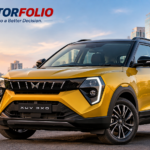
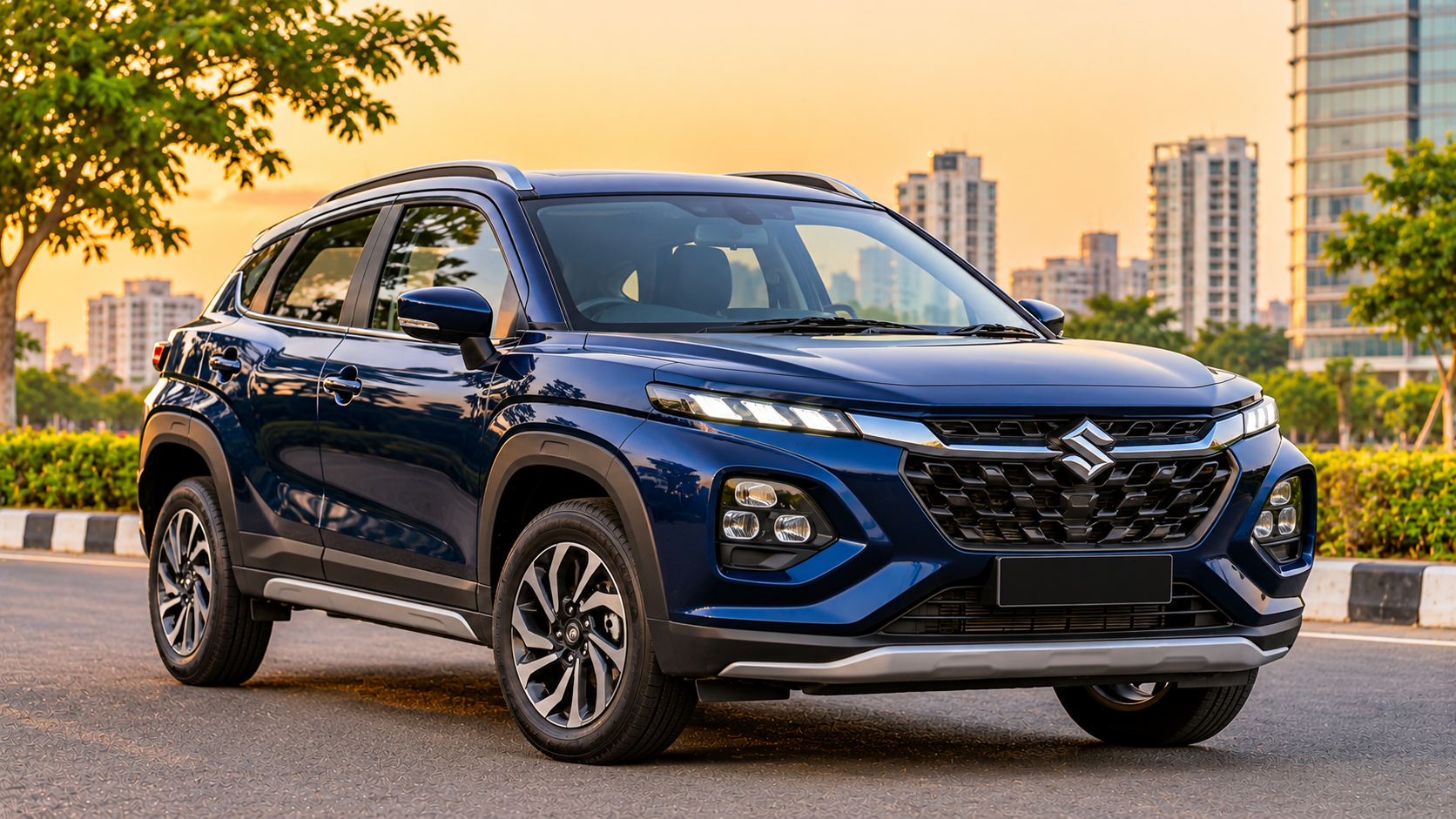
The Maruti Suzuki Fronx comes in five trims—Sigma, Delta, Delta+, Zeta and Alpha—across petrol, turbo-petrol and CNG powertrains. This variant-by-variant guide explains exactly what you get at each price point, which features are worth paying for, and which Fronx makes the most sense for city commuters, enthusiasts and high-mileage drivers.
Introduction
The Maruti Suzuki Fronx has a problem that most cars would envy: too many good options. With five main trims and more than a dozen configurations, the Fronx spans a price band from roughly ₹6.90 lakh to ₹12.03 lakh (ex-showroom, Delhi) . That range covers everyone from a first-time buyer on a tight budget to an enthusiast who wants the turbo engine and every tech feature Maruti offers.
But that breadth is also the confusion. Walk into a Nexa showroom and the variant names—Sigma, Delta, Delta+, Zeta, Alpha—sound like a ranking system without telling you what you actually get. Worse, the engine choices change depending on the variant: the base cars use a 1.2-litre petrol, the mid-range opens up the turbo, and CNG is limited to the cheapest trims.
This guide fixes that. Below is a clear, verified breakdown of every Maruti Suzuki Fronx variant, what each one includes, what it costs, and who it is actually for. No brochure jargon. No guesses. If a fact needs human confirmation before publishing, it is flagged.
Fact-checking note: Prices and variant lists for the Fronx have changed multiple times since launch, including a July 2025 safety update that made six airbags standard. Always confirm the current ex-showroom price and variant availability with your local Nexa dealer before booking. Prices cited here are from published aggregator data as of late 2026 and are ex-showroom, Delhi unless stated otherwise.
Table of Contents
- Fronx Variants at a Glance
- Engine and Powertrain Options
- Sigma: The Safety-First Base
- Delta: The Sensible Step-Up
- Delta+: The Turbo Gateway
- Zeta: The Enthusiast’s Sweet Spot
- Alpha: The Fully Loaded Flagship
- CNG: Which Variants Offer It?
- Safety Across the Range (Including the ANCAP Warning)
- Which Fronx Variant Should You Buy?
- Common Mistakes to Avoid
- FAQs
- Final Verdict
1. Fronx Variants at a Glance
The Fronx is sold exclusively through Maruti Suzuki’s Nexa network. The lineup has seen minor reshuffles since its 2023 launch, but the five core trims remain: Sigma, Delta, Delta+, Zeta and Alpha .
| Variant | Who It Suits | Available Engines |
|---|---|---|
| Sigma | Budget-first buyers who value safety over screens | 1.2L Petrol MT, 1.2L CNG MT |
| Delta | City commuters wanting modern connectivity | 1.2L Petrol MT/AMT, 1.2L CNG MT |
| Delta+ | Buyers who want turbo performance on a budget | 1.2L Petrol MT/AMT, 1.0L Turbo MT |
| Zeta | Enthusiasts and comfort-focused families | 1.0L Turbo MT/AT only |
| Alpha | Tech lovers and top-spec seekers | 1.0L Turbo MT/AT only |
Important: The 1.0-litre Boosterjet turbo engine is not available on Sigma or Delta. If you want the turbo, you must start at Delta+ (manual only) or Zeta (manual and automatic) .
2. Engine and Powertrain Options
There are three distinct powertrains. Understanding them is more important than understanding the feature list, because the engine you choose shapes the driving experience more than any touchscreen.
1.2-Litre DualJet Petrol (Sigma, Delta, Delta+)
A naturally aspirated four-cylinder producing approximately 89–90 PS and 113 Nm. It is paired with a 5-speed manual or a 5-speed AMT (AGS). This is the refinement-first, city-friendly choice.
- ARAI mileage: 21.79 km/l (MT) and 22.89 km/l (AMT)
- Real-world expectation: Owners and testers report roughly 13–15 km/l in the city and 18–21 km/l on the highway
1.0-Litre Boosterjet Turbo Petrol (Delta+, Zeta, Alpha)
A three-cylinder turbocharged engine delivering approximately 99–100 PS and 147.6 Nm of torque from 2,000 rpm. Gearbox options are a 5-speed manual or a 6-speed torque converter automatic with paddle shifters. Turbo variants get Progressive Smart Hybrid with regenerative braking.
- ARAI mileage: 21.50 km/l (MT) and 20.01 km/l (AT)
- Autocar India tested mileage: 16.75 km/l combined for the Alpha MT, with 13.5 km/l city and 20.0 km/l highway
- Real-world expectation: Turbo petrol is thirstier in traffic than the 1.2L, roughly 12–14 km/l city
1.2-Litre S-CNG (Sigma, Delta)
Factory-fitted CNG with 77.5 PS and 98.5 Nm in CNG mode, paired exclusively with a 5-speed manual. The petrol tank remains for bi-fuel operation.
- Claimed efficiency: 28.51 km/kg
- Real-world CNG: Roughly 20–22 km/kg city and 25–28 km/kg highway
- Running cost: CNG is dramatically cheaper per kilometre. One analysis estimates a five-year fuel cost of roughly ₹3.12 lakh for CNG versus ₹6.43 lakh for petrol, assuming typical usage patterns . Treat these as estimates, not guarantees.
Editorial note: The turbo engine is not a “hot hatch” motor. HT Auto’s review notes noticeable turbo lag below 2,400 rpm and that the initial pickup “doesn’t quite have the turbo appeal” . It is a strong mid-range performer, not a rev-happy unit.
3. Sigma: The Safety-First Base
Ex-showroom price (approx.): ₹6.90 lakh (Petrol MT) to ₹7.94 lakh (CNG)
The Sigma is not the stripped-out penalty box you might expect. Its headline feature is safety: six airbags are standard, along with Electronic Stability Program (ESP), hill hold assist, ABS with EBD, ISOFIX mounts, rear parking sensors and a rear defogger . For a base variant under ₹7 lakh, that is a genuinely strong safety package.
Comfort features include automatic climate control, keyless entry, power windows all around, a 60:40 split rear seat, tilt-adjustable steering and halogen projector headlamps .
What you give up: No touchscreen. There is No rear camera. No alloy wheels. No push-button start.
Who should buy it: Buyers whose absolute priority is staying under ₹8 lakh on-road while keeping six airbags and basic comfort. The Sigma CNG is the cheapest way into a factory-CNG Fronx and makes sense for high-mileage city use.
4. Delta: The Sensible Step-Up
Ex-showroom price (approx.): ₹7.75 lakh (Petrol MT) to ₹8.74 lakh (CNG)
The Delta adds the features most modern Indian buyers consider non-negotiable. The centerpiece is a 7-inch SmartPlay Pro touchscreen with wireless Android Auto and Apple CarPlay, voice commands and OTA updates. You also get steering-mounted controls, electrically adjustable and foldable ORVMs with turn indicators, and a rear parcel tray .
The Delta is available with the 1.2L petrol in manual and AMT forms, and with CNG in manual only. It is not available with the turbo engine.
The AMT question: The Delta AMT is the cheapest automatic Fronx. The 5-speed AMT is adequate for city traffic but not a smooth torque-converter. If you want a genuinely refined automatic, you need to step up to the Zeta’s 6-speed torque converter with the turbo engine—at a significantly higher price.
Who should buy it: The Delta is the value sweet spot for most city buyers who want a modern infotainment screen, wireless smartphone connectivity and an automatic option without stretching to turbo money.
5. Delta+: The Turbo Gateway
Ex-showroom price (approx.): ₹8.14 lakh (1.2L Petrol MT) to ₹8.97 lakh (Turbo MT)
The Delta+ is a bridge variant. It adds visual and convenience upgrades over the Delta, including LED headlamps with LED DRLs, automatic headlamps, and painted alloy wheels .
Its real significance is that it is the cheapest way to get the 1.0L Boosterjet turbo engine, at roughly ₹8.97 lakh for the manual . However, at this price point, the Delta+ Turbo does not include several comfort features found on the Zeta, such as rear AC vents, wireless charging, a height-adjustable driver’s seat and Suzuki Connect.
Who should buy it: Enthusiasts on a strict budget who want the turbo engine above all else and are willing to live without some convenience features. If you can stretch, the Zeta is the more complete turbo package.
6. Zeta: The Enthusiast’s Sweet Spot
Ex-showroom price (approx.): ₹9.76 lakh (Turbo MT) to ₹12.75 lakh (Turbo AT, on-road Delhi per Autocar)
The Zeta is where the Fronx starts to feel like a properly equipped modern car rather than a budget compromise. It builds on the Delta+ with a substantial list of features that matter for daily ownership:
- Rear AC vents (a major comfort upgrade for Indian summers)
- Wireless phone charger
- Engine push start/stop with smart key
- Height-adjustable driver’s seat
- Front centre armrest
- Rear USB Type-A and Type-C charging
- Suzuki Connect connected-car suite
- Rear wiper and washer
- Rearview camera
- Side and curtain airbags (already standard from the 2025 update, but worth noting)
- Two additional tweeters for a 6-speaker setup
- Paddle shifters on the automatic variant
The Zeta is available only with the 1.0L turbo engine, in manual and automatic forms . The 6-speed torque converter automatic is a conventional unit with paddle shifters, and it is a smoother experience than the 1.2L’s AMT.
Who should buy it: This is arguably the best all-round Fronx for enthusiasts and small families. You get the turbo engine, the better automatic, rear AC vents and the connectivity features that make daily driving easier. If your budget reaches the ₹10–11 lakh ex-showroom range, the Zeta Turbo MT is the one to test-drive first.
7. Alpha: The Fully Loaded Flagship
Ex-showroom price (approx.): ₹10.61 lakh (Turbo MT) to ₹13.74 lakh (Turbo AT, on-road Delhi per Autocar)
The Alpha is the only way to get the Fronx’s full technology suite. Its exclusive features include:
- 9-inch SmartPlay Pro+ touchscreen (up from 7 inches)
- 360-degree surround-view camera
- Head-up display (HUD) with turn-by-turn navigation prompts
- Auto-dimming interior rearview mirror
- Cruise control
- Auto-folding ORVMs
- ARKAMYS-tuned sound system
- Precision-cut alloy wheels
- Leather-wrapped steering wheel
- UV-cut glass
- Dual-tone exterior colour option
The Alpha is available only with the turbo engine, in manual and automatic forms .
Is the Alpha worth it? The 360 camera and HUD are genuinely useful in tight city parking and highway driving, respectively. But the Alpha commands a significant premium over the Zeta. If you do not specifically want the larger screen, the camera system and the HUD, the Zeta delivers most of the ownership experience for less money. One analysis suggests the Alpha’s headline extras are “often not used” by typical buyers, making the mid-range Delta+ or Zeta the more rational choice . That is an opinion, not a fact, but it is a reasonable one.
Who should buy it: Tech-focused buyers who want every feature Maruti offers on this platform and are comfortable paying for it.
8. CNG: Which Variants Offer It?
CNG is available only on the Sigma and Delta variants, paired with the 1.2L petrol engine and a 5-speed manual gearbox . You cannot get CNG with the turbo engine or any automatic.
| CNG Variant | Approx. Ex-Showroom Price |
|---|---|
| Sigma CNG MT | ₹7.94 lakh |
| Delta CNG MT | ₹8.74 lakh |
The trade-offs:
- Boot space: CNG tanks eat into luggage capacity. The Fronx’s standard boot is 308 litres; CNG reduces this significantly. [VERIFY exact CNG boot volume with dealer before publishing]
- Performance: 77.5 PS in CNG mode is adequate for city driving but noticeably slower on inclines and with a full load .
- Running cost: The savings are real. CNG is the cheapest Fronx to run per kilometre, and the premium over petrol (roughly ₹0.94 lakh for the Delta) can be recovered in about 17 months at typical usage levels, according to one estimate .
Who should buy it: High-mileage city drivers—cab operators, sales professionals, or anyone covering 1,500+ km per month—who can live with reduced boot space and manual-only operation.
9. Safety Across the Range (Including the ANCAP Warning)
Maruti made six airbags standard across all Fronx variants in July 2025. Standard safety features now include front, side and curtain airbags, ESP, hill hold assist, ABS with EBD, ISOFIX mounts, rear parking sensors and a rear defogger . Higher variants add a rear camera (Delta/Zeta) and a 360-degree camera (Alpha).
However, there is an important caveat that Indian buyers should know. The Suzuki Fronx exported to Australia received a one-star ANCAP rating, with ANCAP specifically flagging a rear seatbelt failure during the full-width frontal crash test and advising consumers to be aware of the component failure . This was an Australasian NCAP test of an export-market car, and the India-spec Fronx has not been independently crash-tested by Global NCAP or Bharat NCAP at the time of writing.
Fact-checking flag [VERIFY BEFORE PUBLISHING]: Confirm whether the India-spec Fronx has undergone any Bharat NCAP testing since this article’s research date. If it has, update this section with the official rating. The ANCAP result applies to export models and may not reflect India-spec hardware, but it is a relevant safety signal that deserves transparency.
What this means for buyers: The Fronx’s standard six-airbag package is welcome. But the absence of an India-specific independent crash rating, combined with the ANCAP seatbelt concern, means safety should not be assumed. Ask your dealer directly about the seatbelt component and any India-specific safety updates.
10. Which Fronx Variant Should You Buy?
A practical buying note: The Delta+ Turbo MT (around ₹8.97 lakh) is tempting for the engine alone, but it lacks rear AC vents and several comfort items. For roughly ₹80,000 more, the Zeta Turbo MT gives you a car you will be happier living with for five years. Test both if your budget allows.
11. Common Mistakes to Avoid
Mistake 1: Assuming the turbo is always the better engine. The 1.0L Boosterjet has noticeable lag below 2,000 rpm and is thirstier in city traffic than the 1.2L. If you mostly drive in stop-and-go conditions, the 1.2L is smoother and cheaper to run.
Mistake 2: Buying the Delta+ Turbo without checking the Zeta. The Delta+ Turbo is the cheapest way into the turbo engine, but the feature gap to the Zeta is significant. Sit in both before deciding.
Mistake 3: Choosing CNG without measuring your boot needs. The CNG tank reduces luggage space. If you regularly carry large bags or use the boot for work, the petrol or turbo may be more practical despite higher running costs.
Mistake 4: Assuming the automatic is the same across variants. The Delta’s AMT and the Zeta/Alpha’s 6-speed torque converter are completely different gearboxes. Drive both if an automatic is a priority.
Mistake 5: Ignoring the ANCAP seatbelt finding. The export-market ANCAP result is not an India-specific rating, but it is a legitimate safety question. Ask your dealer about it.
12. FAQs
Which Fronx variant is the best value?
The Delta 1.2 MT or AMT is the value pick for most city buyers. It includes the touchscreen, wireless smartphone connectivity and essential comfort features at a reasonable price. For enthusiasts, the Zeta 1.0 Turbo is the best value within the turbo range.
Does the Fronx base variant have six airbags?
Yes, as of the July 2025 update, six airbags are standard across all variants, including the Sigma .
Which Fronx variant offers CNG?
CNG is available only on the Sigma and Delta variants, with the 1.2L petrol engine and a 5-speed manual gearbox .
Is the Fronx turbo automatic better than the AMT?
Yes, in terms of refinement. The Zeta and Alpha use a 6-speed torque converter automatic, which is smoother and more responsive than the 5-speed AMT in the Delta. The trade-off is a higher purchase price.
What is the real-world mileage of the Fronx?
Expect roughly 13–15 km/l city and 18–21 km/l highway for the 1.2L petrol, and 12–14 km/l city for the turbo petrol. CNG delivers around 20–22 km/kg city. These are estimates; actual figures vary with driving style, traffic and AC use .
Is the Fronx safe?
The India-spec Fronx has six airbags and standard ESP, but it has not been independently crash-tested by Global NCAP or Bharat NCAP at the time of writing. The export-market Suzuki Fronx received a one-star ANCAP rating with a rear seatbelt failure flagged . Buyers should ask dealers for the latest India-specific safety information. [VERIFY BEFORE PUBLISHING]
13. Final Verdict
The Maruti Suzuki Fronx is not a car where the top variant is automatically the best choice. The variant ladder is genuinely spread out, and the “right” Fronx depends on how you drive and what you value.
If you want the lowest price with no safety compromise: Sigma. It is one of the better-equipped base variants in the sub-compact SUV segment.
If you want the most sensible daily driver: Delta. The touchscreen and wireless connectivity transform the ownership experience for a modest premium.
If you want the best turbo package: Zeta. It pairs the Boosterjet engine with the comfort features that make it livable, and the 6-speed automatic is the gearbox to have.
If you want every feature: Alpha. It is expensive for a Fronx, but the 360 camera and HUD are genuinely useful, not just showroom glitter.
Before you book: Confirm the current ex-showroom and on-road price with your Nexa dealer, ask specifically about the India-spec safety record, and test-drive both the 1.2L and turbo engines if possible. The Fronx rewards an informed decision—and that is the entire point of MOTORFOLIO: The Road to a Better Decision.
D. Comparison Tables
Table 1: Fronx Variant Feature Highlights (What You Gain at Each Step)
| Feature | Sigma | Delta | Delta+ | Zeta | Alpha |
|---|---|---|---|---|---|
| Touchscreen | None | 7-inch | 7-inch | 7-inch | 9-inch |
| Wireless CarPlay/Android Auto | No | Yes | Yes | Yes | Yes |
| Six airbags | Yes | Yes | Yes | Yes | Yes |
| Rear camera | No | Yes | Yes | Yes | 360-degree |
| Alloy wheels | No | No | Painted | Yes | Precision-cut |
| LED headlamps/DRLs | No | No | Yes | Yes | Yes |
| Rear AC vents | No | No | No | Yes | Yes |
| Wireless charging | No | No | No | Yes | Yes |
| Push start/stop | No | No | No | Yes | Yes |
| Suzuki Connect | No | No | No | Yes | Yes |
| Head-up display | No | No | No | No | Yes |
| Cruise control | No | No | No | No | Yes |
| Turbo engine option | No | No | Yes (MT) | Yes (MT/AT) | Yes (MT/AT) |
| CNG option | Yes | Yes | No | No | No |
Sources: , , . Features may vary by model year; confirm with dealer.
Table 2: Fronx Powertrain Comparison (Verified Figures)
| Specification | 1.2L Petrol | 1.0L Turbo Petrol | 1.2L CNG |
|---|---|---|---|
| Power | ~89–90 PS | ~99–100 PS | 77.5 PS (CNG mode) |
| Torque | 113 Nm | 147.6 Nm | 98.5 Nm (CNG mode) |
| Gearbox | 5MT / 5AMT | 5MT / 6AT | 5MT only |
| ARAI Mileage | 21.79 (MT) / 22.89 (AMT) km/l | 21.50 (MT) / 20.01 (AT) km/l | 28.51 km/kg |
| Real-world city (est.) | 13–15 km/l | 12–14 km/l | 20–22 km/kg |
| Fuel tank | 37 litres | 37 litres | Petrol + CNG tank |
Sources: , , , , . Real-world figures are estimates from published tests and owner reports, not guarantees.